No products in the cart.

Shopping cart (0)
Subtotal: £0.00
You're only £75.00 away from Free UK Delivery!
Congratulations! You've got free shipping.

Co-Regulation: How Stress and Safety Affect Intimacy in Relationships
Recent Posts

“No”, “Stop” and Safewords: Agreeing Your Signals
26/10/2026 Comments Off on “No”, “Stop” and Safewords: Agreeing Your Signals
Cystitis After Sex: Why It Happens and ...
13/10/2026 Comments Off on Cystitis After Sex: Why It Happens and What Helps
When One of You Wants Sex More ...
06/10/2026 Comments Off on When One of You Wants Sex More Than the Other
Body-Safe Sex Toys: A Plain Guide to ...
01/10/2026 Comments Off on Body-Safe Sex Toys: A Plain Guide to MaterialsCategories
Tag Cloud
clean intimate formulation
cortisol and sex drive
couples intimacy
cycle syncing
gut-brain axis
gut health
hormonal wellness
intimate dryness
intimate health uk
intimate self-care
intimate skincare
intimate wellness
libido
libido and hormones
massage candle
menstrual cycle
mindful intimacy
nervous system
nervous system compatibility
nervous system regulation
pelvic floor and pleasure
pelvic floor exercises
pelvic floor health
ph-balanced products
relationship wellness
self-care ritual
sexual wellbeing
sexual wellness
sexual wellness UK
sleep and libido
slow sex
soft life intimacy
solo pleasure
UK wellness
UK wellness 2026
UK women's health
vulval wellness
vulvovaginal microbiome
wand massager
wellness 2026
wellness trends 2026
women's intimate care
women's wellbeing
women's wellness 2026
womens sleep health
Read the guides
Weekly intimate wellness guides
Body-safe advice and honest buying guides — one email a week, always discreet.
Weekly — unsubscribe any time. Always discreet.
When you’ve had a tough week, being close to your partner can feel calming, or oddly draining. “Co-regulation” is a popular term for the idea that partners influence each other’s stress and emotions. This article looks at what studies show, what they don’t, and what you can try at home.
What Researchers Mean by Co-Regulation
Researchers use “physiological linkage” for the way partners’ body states can move together. A 2015 review found evidence of linkage across many measures, both in laboratory arguments and in everyday life (Timmons et al., 2015). The findings pull in two directions. Linkage in the stress hormone cortisol was associated with lower relationship satisfaction. Linkage across several body systems was associated with feeling connected. As the authors put it, linkage can help, and it can also put couples at risk if they get stuck in patterns of conflict or stress. A separate review still files physiological coregulation under things yet to be investigated ( Pietromonaco & Collins, 2017 ).
What One Experiment Found About Touch
In one experiment, 67 women aged 20 to 37, all married or living with a partner, took a standardised stress test after being assigned to no partner interaction, verbal support from their partner, or a massage from their partner. The women who had physical contact showed significantly lower cortisol and heart rate responses. Oxytocin did not differ between groups, and verbal support alone gave no protective effect (Ditzen et al., 2007). That is one small laboratory study, all of them women. It cannot tell you what happens in every couple, or what happens over years. A 2025 review describes touch as helping to reduce negative feelings and distress (Ugurlu & Keltner, 2025).
A Word on “Nervous System Compatibility”
Earlier versions of this article used the phrase “nervous system compatibility” and leaned on polyvagal theory. We have removed both. Polyvagal theory is contested: a 2023 review argues that its five basic premises lack scientific support (Grossman, 2023), and we found no measure of “compatibility” between two people’s nervous systems.
Stress, Communication and Desire
The NHS lists relationship problems and stress, anxiety or depression among the causes of low sex drive (NHS). In Britain’s third National Survey of Sexual Attitudes and Lifestyles, low sexual function was associated with depression, relationship dissatisfaction and poor communication about sex (Mitchell et al., 2013). A meta-analysis of 48 studies found that couples who communicate more about sex tend to report better sexual function (r = .35 overall, and .16 for desire) (Mallory et al., 2019). These are associations, not proof that one causes the other.
Practical Ideas for Winding Down Together
- Make time for slow, low-pressure touch, such as a shoulder or hand massage, the kind of contact used in the experiment above.
- Talk about it: our guide to talking about intimacy with your partner may help.
- The NHS suggests giving yourself time to relax before bed and putting your phone away (NHS).
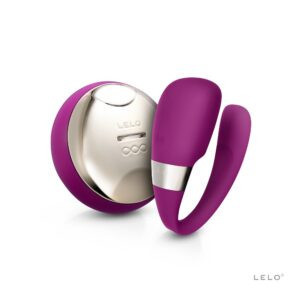
A prompt helps some couples get going. The Sexmatch Foreplay Edition card game and the LELO Tiani 3 couples’ massager are products for play. Neither is a treatment, and we make no health claims for them. LELO says to use only water-based lubricant with its toys.
When to Get Help
The NHS advises seeing a GP if you are worried about a low sex drive, if you think a medicine or hormonal contraception may be affecting it, or if it does not return to normal after pregnancy (NHS).
Sources
- Timmons et al., Physiological linkage in couples, Journal of Family Psychology 2015
- Pietromonaco and Collins, Interpersonal mechanisms linking close relationships to health, American Psychologist 2017
- Ditzen et al., Psychoneuroendocrinology 2007
- Ugurlu and Keltner, Touch as emotion regulation, Frontiers in Psychology 2025
- Grossman, Fundamental challenges and likely refutations of the five basic premises of the polyvagal theory, Biological Psychology 2023
- NHS: low sex drive (loss of libido)
- Mitchell et al., Sexual function in Britain: Natsal-3, The Lancet 2013
- Mallory et al., Sexual communication and sexual function: a meta-analysis, Journal of Sex Research 2019
- NHS: insomnia
This article is for general information only and is not medical advice; speak to your GP or a qualified health professional.
Featured Wellness Products
Author

Donna Torr is the founder of Ladyloving, a UK-based, female-owned adult wellness retailer trading since 2006. She writes the Academy to give plain-English, judgement-free guidance on pelvic floor health, perimenopause, desire and choosing body-safe products. Her articles link to NHS and professional-body sources, and are educational rather than medical advice.