No products in the cart.


Recent Posts

What Happens to Your Body When You’re ...
29/09/2026 Comments Off on What Happens to Your Body When You’re Turned On (and Why Rushing Hurts)
How to Talk About Intimacy With Your ...
17/09/2026 Comments Off on How to Talk About Intimacy With Your Partner (Without the Awkward Silence)
Self-Care Practices for UK Women: What Actually ...
07/09/2026 Comments Off on Self-Care Practices for UK Women: What Actually Works (and What Doesn’t)
Your Personal Superhero: Finding Confidence and Self-Love ...
05/09/2026 Comments Off on Your Personal Superhero: Finding Confidence and Self-Love Through Intimate WellnessDesire is rarely just one thing. It is not simply a spark of attraction or a hormonal spike — it is a full-body conversation involving your brain, your hormones, your mood, your stress levels, and, increasingly, your gut. Researchers are looking at how the gut microbiome may interact with hormones and mood. We could not find good human studies linking it to libido. Here is what is known, and what isn’t.
If desire has felt flat lately, the list of possible reasons is long. The NHS lists relationship problems, stress, anxiety or depression, hormonal changes, some medicines, hormonal contraception, alcohol and long-term conditions (NHS).
What Is the Microbiome and Why Does It Matter for Desire?
Your gut microbiome is a vast, dynamic ecosystem of bacteria, fungi, and other microorganisms that lives primarily in your large intestine. The open questions are whether it influences immune function, inflammation, hormone metabolism and neurotransmitter production.
A 2025 review of the gut microbiota and female reproductive and gynaecological health found that most current evidence is correlational, and it focused on conditions such as endometriosis, not on desire (Escorcia Mora et al., Life, 2025).
The Oestrobolome: Your Gut’s Hormone Regulator
The “oestrobolome” is the term for gut bacteria that produce enzymes involved in recycling oestrogen. Researchers are studying its role, but the evidence so far is largely correlational (Life, 2025), and it has not been shown that changing it changes libido.
Low desire and vaginal dryness have other, more common causes, such as the menopause, breastfeeding, some medicines and perfumed soaps or washes (NHS; NHS). If either is causing you trouble, your GP is the place to start.
Dopamine, Serotonin, and the Chemistry of Wanting
Serotonin and dopamine are involved in mood, motivation and reward, and both are made in the body in several places. Whether gut bacteria actually shift mood or desire in people is an open question.
Anxiety and low mood can reduce interest in sex (NHS). None of that is a character flaw, and it isn’t automatically a relationship problem. Your GP can help.
The Signs Your Gut May Be Affecting Your Desire
If your desire has changed, it is worth noticing patterns and mentioning them to your GP, who can look for common causes.
Libido Changes After Gut Disruption
Have you noticed your desire dipping after a course of antibiotics, a bout of food poisoning, or a period of significant dietary change? Illness, medicines, tiredness and stress can all flatten interest in sex, which makes it hard to pin down which one is doing it.
Stress and anxiety are among the causes of low sex drive listed by the NHS (NHS). We cover the one small study on sleep and desire elsewhere.
Hormonal Symptoms Alongside Low Desire
Irregular periods, very heavy or painful periods, or new symptoms alongside low desire are worth mentioning to your GP, who can look at hormonal and other causes.
Mood as a Gateway to the Body
Brain fog, low-grade anxiety and emotional flatness have many possible causes. If they persist, or you feel low, speak to your GP. Intimacy, which needs presence and openness, is often one of the first things to fade when we are struggling.
How to Support Gut Health for Intimate Wellbeing
Researchers do not yet know whether changing your gut bacteria would change your desire.
Feed the Bacteria That Support Your Hormones
Large citizen-science data from the American Gut Project (over 10,000 samples) linked a more varied plant diet with a more diverse gut microbiome; this was observational, and it says nothing about libido (McDonald et al., mSystems, 2018).
Manage Stress as a Gut Intervention
Stress and anxiety are recognised causes of low sex drive (NHS). The NHS suggests staying active, keeping in touch with other people and making time for yourself (NHS).
Stress can make it harder to feel interested in sex. A relaxing routine will help you feel calmer. It is not a treatment for low desire. If that persists, or it distresses you, speak to your GP.
Prioritise Sleep and Movement
The NHS suggests going to bed and getting up at the same time each day and giving yourself time to relax before bed (NHS). Our article on sleep and desire covers what one small study found.
Pleasure as Part of the Healing Loop
Pleasure, including self-pleasure, is a valid part of intimate wellbeing in its own right; we could not find evidence that it changes gut health.
In a small laboratory study of ten women, heart rate, blood pressure and stress hormones rose with orgasm, and the hormone prolactin stayed raised afterwards (Exton et al., 1999). In an online survey of 778 adults, people who reported orgasm tended to say they slept better afterwards, but this is self-reported and cannot show cause (Lastella et al., 2019).
This is why the approach to intimate wellness we take at Ladyloving is holistic rather than narrow. It is not about one product or one practice. It is about understanding the body as an interconnected system and creating the conditions — nutritional, emotional, physical — in which desire can arise naturally.
Featured Wellness Products
Pleasure tools are sold for pleasure and are not a treatment for low desire. If you would like to browse, here are two options.
The LELO Enigma Wave Dual Stimulation Sonic Massager pairs sonic wave technology with dual stimulation. LELO lists it as made from silicone and ABS with an insertable length of 140 mm, and says to use water-based lubricant only.
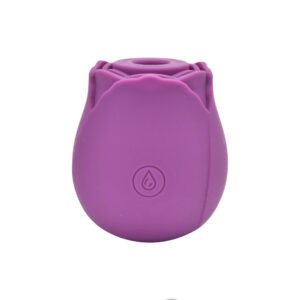
The Loving Joy Rose Toy Clitoral Suction Vibrator uses air-pulse suction for clitoral stimulation. The maker says it is splashproof but not submersible, so it should not be used in the bath or shower, and to use water-based lubricant only.
A Final Word on Patience and Curiosity
Low desire is common, has many causes and is not a personal failing. If it worries you, speak to your GP.
Desire is less about willpower and more about conditions such as stress, sleep, health and relationships (NHS).
Looking after your general health, and speaking to your GP when something changes, is a sensible place to begin.