No products in the cart.


Recent Posts

Cystitis After Sex: Why It Happens and ...
13/10/2026 Comments Off on Cystitis After Sex: Why It Happens and What Helps
When One of You Wants Sex More ...
06/10/2026 Comments Off on When One of You Wants Sex More Than the Other
Body-Safe Sex Toys: A Plain Guide to ...
01/10/2026 Comments Off on Body-Safe Sex Toys: A Plain Guide to Materials
What Happens to Your Body When You’re ...
29/09/2026 Comments Off on What Happens to Your Body When You’re Turned On (and Why Rushing Hurts)Something has shifted in how the pelvic floor gets talked about. For years it was a distinctly medical conversation — raised mainly in the context of childbirth, incontinence, or a physiotherapy referral — and even then, handled with a kind of resigned practicality rather than any real curiosity. That’s changing. As women’s health research has expanded, so has the understanding that the pelvic floor isn’t just a structural support system. It may also be involved in sexual sensation, arousal and orgasm. The gap between what women are told about this and what the evidence actually shows is one worth closing.
What the Pelvic Floor Actually Does
The pelvic floor is a layered group of muscles, ligaments, and connective tissue that forms the base of the pelvis. It supports the bladder, bowel, and uterus — but it also plays a central role in sexual response. These muscles are involved in sexual function, and problems with them can be felt as discomfort or changes in sensation during sex; a pelvic health physiotherapist can assess this.
Like other muscles, the pelvic floor can be trained, and the NHS notes that you may need to do pelvic floor exercises for a few months before you see any benefits (NHS).
The Conversation Nobody Is Having About Tension
The prevailing message about pelvic floor health is that stronger is better, and that Kegel exercises are the default solution. This is only half the picture. The opposite problem is hypertonia: a pelvic floor that’s overactive and chronically too tight.
A tight pelvic floor doesn’t signal strength. Pelvic floor muscle tension can be linked with pain during sex and other pelvic symptoms, and a 2022 systematic review of ten studies found that pelvic floor physiotherapy may help, although the authors call for better-quality trials (Sex Med Rev, 2022). A pelvic health physiotherapist can assess whether strengthening, relaxing or both would suit you.
This is not to dismiss strengthening exercises — for many women, they’re exactly right. But knowing which direction you need to work in matters a great deal.

What the Research Shows
A 2024 systematic review and meta-analysis found that pelvic floor muscle training was associated with improvements in arousal, orgasm, satisfaction and pain scores, but it pooled only four studies and rated the certainty of the evidence as very low (AJOG, 2024). A 2025 review of five trials in postmenopausal women found large improvements in orgasm, arousal and satisfaction scores but no clear benefit for desire or lubrication (Sexual Medicine, 2025).
The Royal College of Obstetricians and Gynaecologists is calling for pelvic floor education to begin earlier. Its 2022 survey of 2,000 UK women found that over 60% had at least one symptom of poor pelvic floor health, and 69% had not spoken to anyone in the NHS about it (RCOG).
Where to Start (Without Guessing)
The most useful first step is understanding your baseline. A pelvic health physiotherapist can assess whether you need strengthening, releasing, or both; ask your GP how to access one locally, or see one privately. Vibrators are sold for pleasure and are not a treatment for pelvic floor problems: national surveys suggest vibrator use is common and linked with better sexual function scores, but surveys cannot show cause and effect (Herbenick et al., 2009). If you would like to explore, browse our vibrators — for example the Svakom Cici 2 — and follow the maker’s instructions.
As that RCOG survey shows, this is common: over 60% of UK women reported at least one symptom ( RCOG ). Start with physiotherapy and a conversation with your GP. And if sex is painful, please don’t sit on it.
Featured Wellness Products
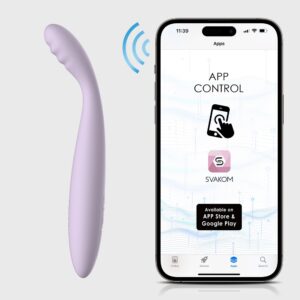
Svakom Cici 2 Flexible Head Slim Vibrator
£72.99
Add to basket

Svakom Amy 2 G-Spot and Clitoral Vibrator Lilac
£64.99
Add to basket
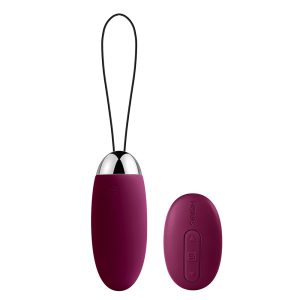
Svakom Elva Remote Control Vibrating Bullet
£59.99
Select options
This product has multiple variants. The options may be chosen on the product page